How Small Businesses Can Build a Simple Marketing System

Most small businesses don’t have a marketing problem.
They have a marketing consistency problem.
One month they post on social media every day.
The next month, nothing.
A newsletter goes out once… then disappears for six months.
A blog is started with enthusiasm, then quietly abandoned.
The issue isn’t effort. Most business owners are working incredibly hard. The issue is that marketing often happens in bursts of energy instead of a steady system.
And without a system, marketing always falls to the bottom of the list.
The good news is that effective marketing doesn’t need to be complicated. In fact, the strongest marketing systems are often surprisingly simple.
Start With Three Core Channels
Instead of trying to be everywhere, focus on three channels that support each other.
For most small businesses, that might look like:
Your website
This is your home base — where people learn who you are, what you do, and why they should trust you.Email marketing
One of the most powerful ways to stay connected with customers and prospects over time.One primary social platform
A place to share updates, insights, and reminders that your business exists.
Many companies make the mistake of trying to manage five or six platforms. The result is scattered effort and inconsistent results. Focus works better.
Create a Predictable Rhythm
Marketing works best when it becomes part of your business routine instead of a sporadic task.
Think of it less like a campaign and more like a rhythm.
A simple rhythm might look like:
One email newsletter each month
Two to four social posts each week
One blog post each month
Regular updates to your website and Google listing
The goal isn’t volume — it’s consistency.
When marketing happens regularly, momentum builds naturally.
Reuse and Expand Your Content
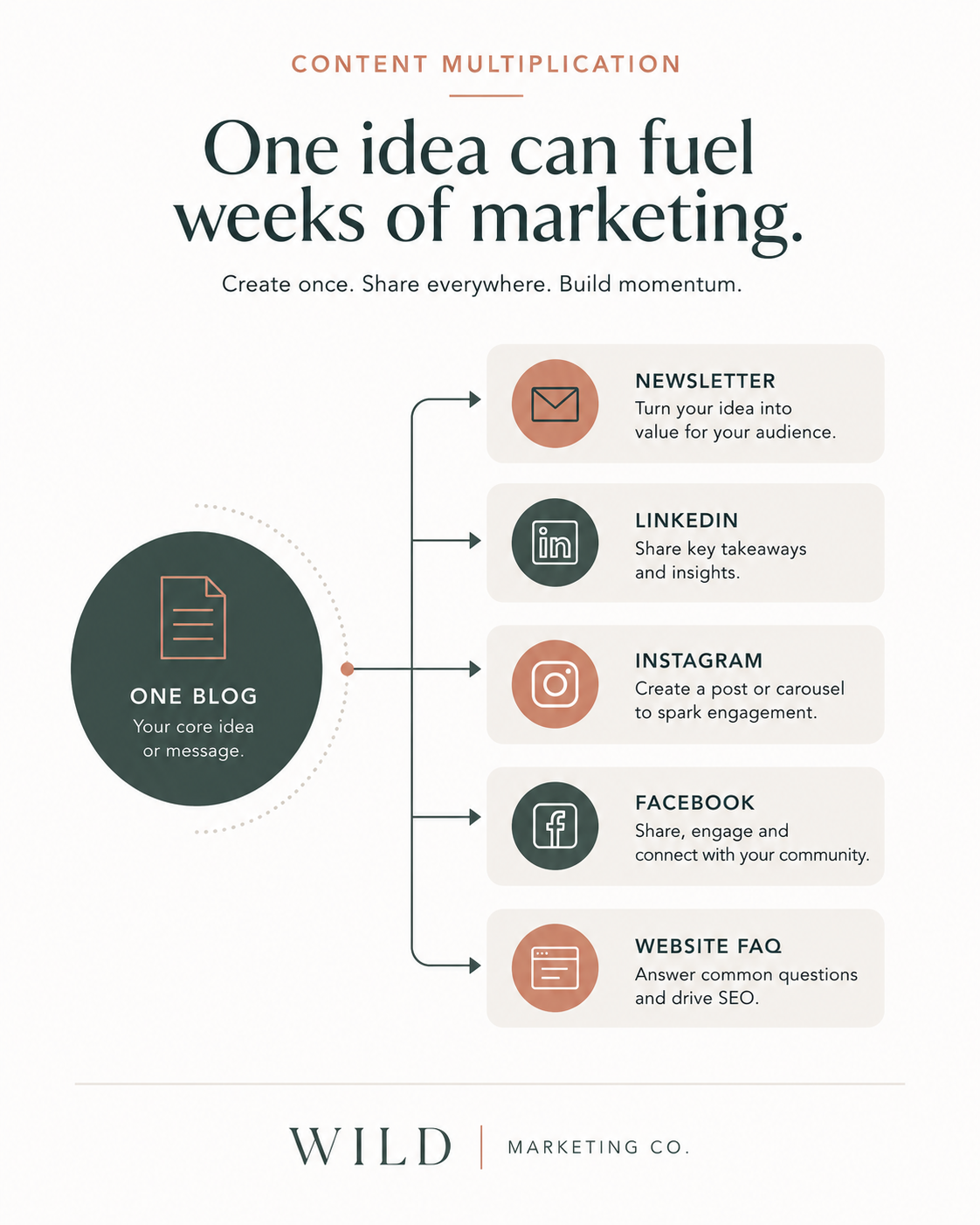
One of the biggest myths in marketing is that every piece of content needs to be completely new.
In reality, strong marketing systems build from one core idea.
For example, a blog post can become:
several social media posts
a newsletter topic
short educational tips
website updates
One well-thought-out idea can support your marketing for weeks. This approach keeps your message consistent while making the work far more manageable.
Track What Actually Matters
Small businesses often feel overwhelmed by marketing data. There are endless metrics available, but only a few really matter.
Focus on the indicators that reflect real business growth, such as:
Website visits from potential customers
Email subscribers
Customer inquiries
Repeat clients and referrals
Marketing is not just about visibility — it’s about building trust and relationships over time.
The System Is the Strategy
Many businesses believe they need the perfect campaign or the latest marketing tactic to grow.
In reality, growth usually comes from something much simpler:
consistent, thoughtful marketing that compounds over time.
A clear message, shared regularly through the right channels, builds recognition, credibility, and trust.
And that’s ultimately what great marketing is designed to do.